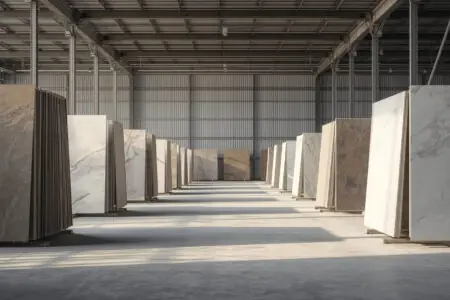
Natural Stone Supply Website Design
An ecommerce website should support real buying behavior, not visual novelty.
It must present products clearly, make navigation intuitive, perform reliably across devices, and guide users through checkout without confusion or unnecessary steps.
Structure, usability, and performance matter more than visual effects or promotional language.
We approach ecommerce websites as long-term digital infrastructure. Each project is structured individually based on product range, business model, and operational needs.
We do not rely on generic templates or pre-built themes. Instead, we focus on clear information architecture, usability, and performance so the website remains stable as the catalog grows and operations evolve.
The goal is not short-term conversion spikes, but a reliable ecommerce foundation that supports sustainable growth over time.
We help service businesses build and improve websites that generate real inquiries. Clear structure, strong positioning and practical improvements focused on results.
No commitment - just a quick review with practical recommendations.
A performance-oriented online store built to extend an established retail brand into a scalable digital sales channel while preserving brand clarity.
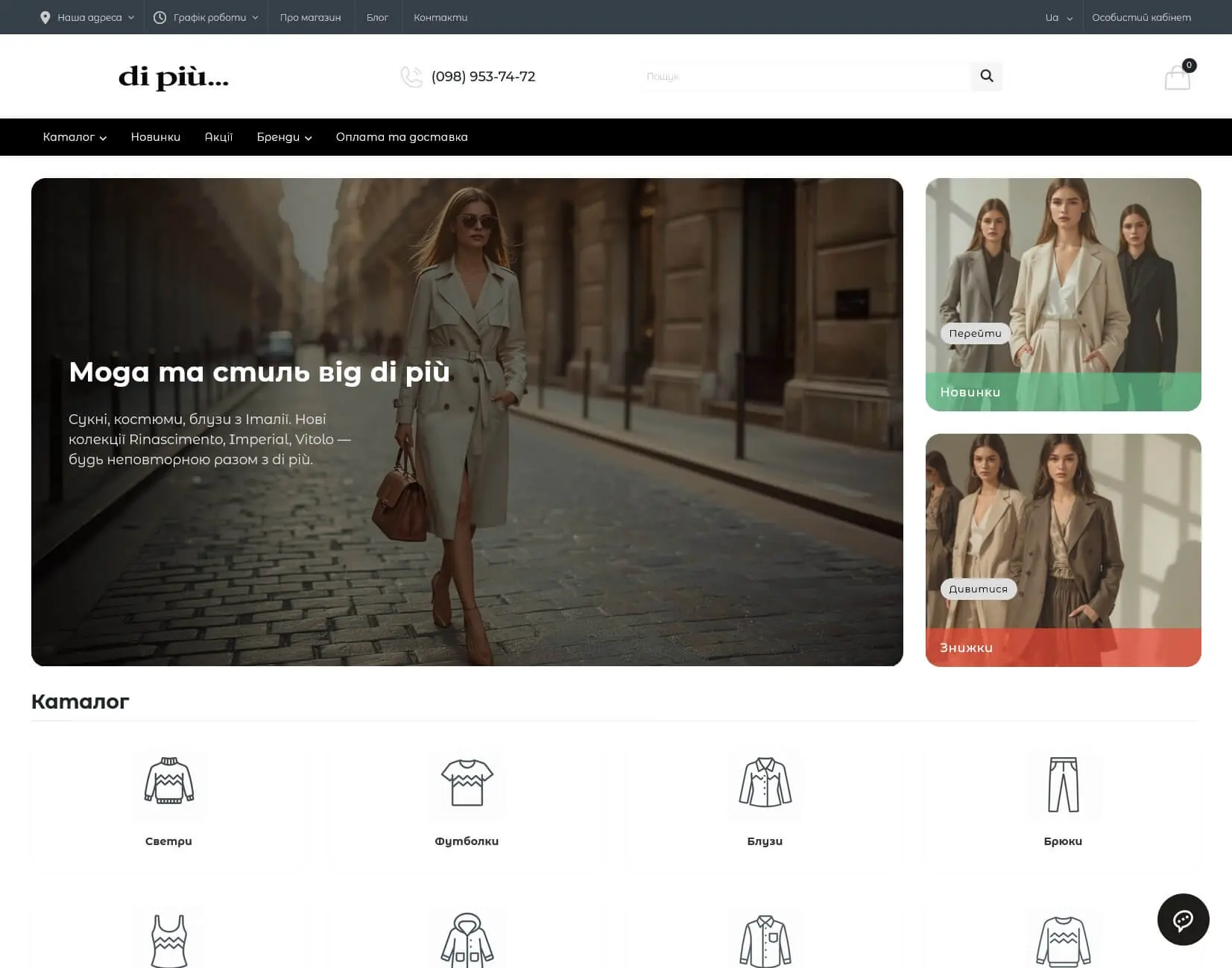
Our work with ecommerce businesses is primarily focused on companies such as:
These companies typically require websites that clearly organize product categories, purchasing flows, and inventory structure while maintaining a smooth and reliable customer experience.
Many ecommerce businesses rely on their website to manage product catalogs, online orders, and customer interactions while ensuring that the platform remains stable as the business grows.
Large enterprise ecommerce platforms or marketplace-based businesses may require more complex infrastructure, integrations, and platform-level systems.
Our ecommerce website projects work best for growing businesses that value clear product structure, usability, and reliable online operations.
This approach may not be the right fit if the primary goal is launching a quick template-based store or running short-term promotional campaigns without long-term structure.
We focus on building ecommerce websites that support sustainable growth, clear product presentation, and dependable customer experience.
We work with businesses that need clarity, structure, and a reliable digital foundation for their website and digital presence.
Every project is approached individually, with a focus on performance, usability, and long-term value rather than short-term wins.
Ecommerce businesses operate in an environment where structure, usability, and technical reliability directly affect results. Customers compare products, pricing, and experience quickly, often across multiple devices, before making a decision.
In this context, a website is not just a storefront. It is an operational system that must support product presentation, navigation, checkout, and ongoing management without friction.
Poor structure, confusing navigation, or technical instability can undermine even strong products and pricing.
A strong ecommerce website should provide clear product organization, intuitive navigation, and a smooth checkout experience. Customers need to quickly understand what products are available, compare options, and complete purchases without friction.
Products are typically organized through clear categories, filters, and product pages that allow customers to easily browse and compare items. A well-structured product catalog helps both customers and search engines understand the store’s offerings.
Effective product pages usually include detailed descriptions, specifications, images, pricing, and availability information. These elements help customers make confident purchasing decisions and reduce uncertainty during the buying process.
Yes. Search visibility helps ecommerce businesses attract customers who are searching for specific products or product categories. Ecommerce SEO typically focuses on product categories, product pages, and structured product information.
Yes. A properly structured ecommerce website allows businesses to add new products, expand categories, and support increasing traffic without disrupting the customer experience.
Ecommerce websites can be built on platforms such as WooCommerce, OpenCart, or custom ecommerce systems, depending on the needs of the business, product catalog complexity, and operational requirements.
Yes. Ecommerce websites are developed with custom structures tailored to product catalogs, purchasing workflows, and long-term operational stability rather than relying solely on generic store templates.
Many local businesses share similar website requirements such as clear service presentation, local visibility, and fast customer contact.
The industries below operate in comparable markets and benefit from structured websites designed to support local lead generation.
Service companies often operate in highly local markets where customers search online for contractors within their city or surrounding areas.
The locations below highlight nearby markets where structured websites help service businesses improve visibility and attract local clients.