
Smarter Site Structure
Navigation, pages, and content are reorganized to make important information easier to find and user journeys more intuitive.
Optima Design redesigns websites that no longer reflect the quality of your company or meet your current business needs — improving architecture, navigation, mobile usability, and SEO foundations while preserving valuable content and search visibility. The goal isn’t just a newer look, but a clearer, faster platform that better supports your customers, marketing, and growth.
Navigation, pages, and content are reorganized to make important information easier to find and user journeys more intuitive.

Outdated layouts are replaced with a cleaner, responsive experience that makes your business easier to understand and trust.

Existing search visibility is considered throughout the redesign, including URLs, content, internal links, metadata, and redirects where needed.

We improve speed, mobile usability, technical quality, and other issues that may be holding your existing website back.

We approach redesigns carefully, improving what needs to change while protecting the content, visibility, and functionality that already work.
A complete website redesign for an established garage door company serving Maryland, Washington, DC, and Northern Virginia.
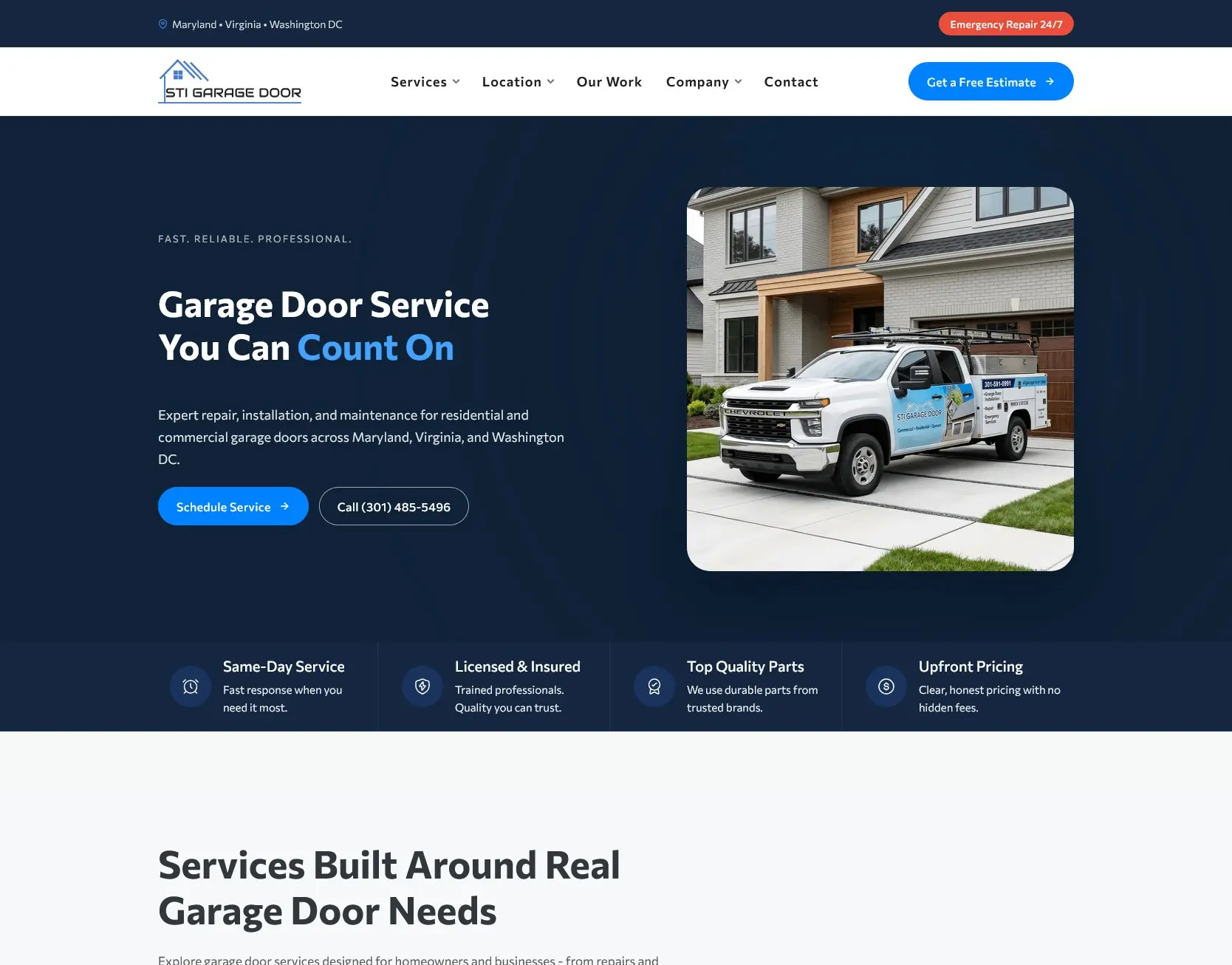
We review your existing website, business goals, services, content, navigation, functionality, mobile experience, and current limitations. We also identify valuable pages, content, URLs, and search visibility that should be considered during the red
We plan the new website architecture, navigation, page hierarchy, content organization, and conversion paths. Existing content is evaluated to determine what should be preserved, improved, consolidated, or replaced before development begins.
We transform the approved structure into a modern, responsive website built around usability, performance, and your current brand. Pages, calls to action, functionality, and SEO fundamentals are developed as parts of one consistent system rather than isolated improvements.
Before launch, we test the redesigned website across devices, review functionality and content, configure necessary redirects, and check important technical and SEO elements. The new website is then launched with careful attention to preserving valuable existing traffic and creating a stronger foundation for future growth.
Whether you need a new website, a redesign, better search visibility, or ongoing support, we can help you build a stronger digital presence.
Signs include an outdated design, difficulty updating content, poor mobile performance, low search visibility, and a website that no longer reflects your current services or business goals.
A redesign can affect rankings if not handled carefully, but a properly planned redesign preserves valuable content, sets up correct redirects, and can improve rankings over time by strengthening structure and usability.
There is no fixed timeline, but many businesses revisit their website every few years, or sooner if it no longer supports current goals, content needs, or user expectations.
A website redesign focuses on the structure, usability, and performance of the site itself, while a rebrand involves changes to visual identity, messaging, and positioning — the two can overlap but are not the same.
Yes, with proper planning. This involves reviewing existing pages, preserving what performs well, setting up redirects, and maintaining search visibility throughout the transition.