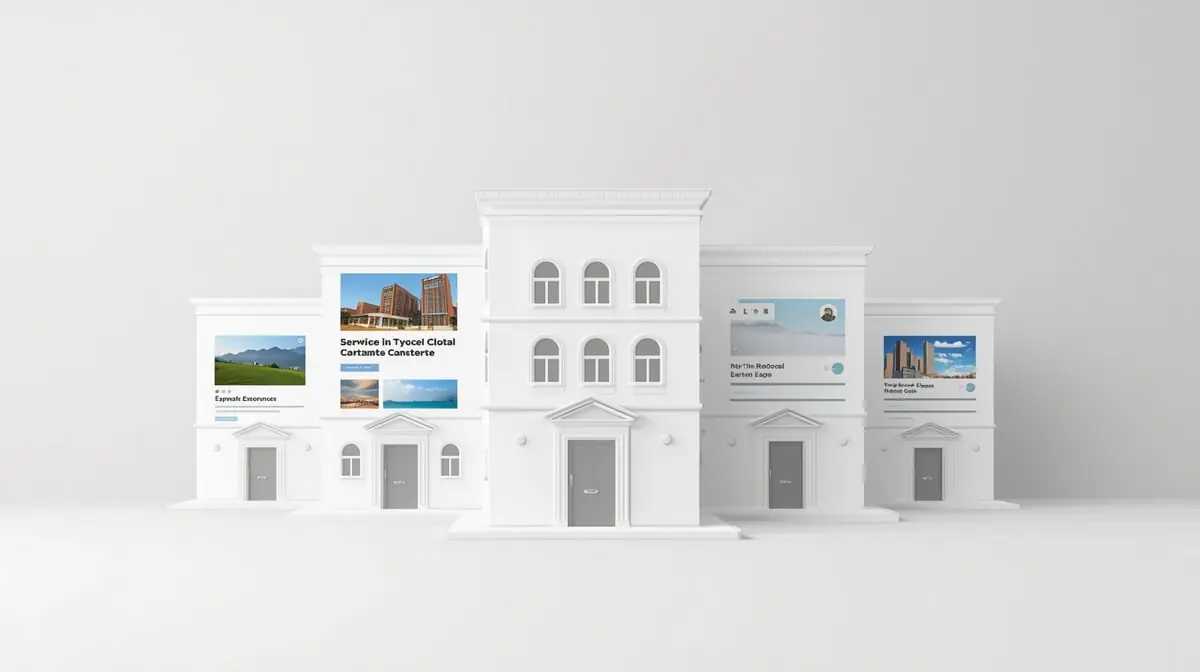

Many business owners spend weeks trying to perfect the homepage. They adjust the headline, argue over the hero image, rewrite the intro, change the button text, and move sections up and down. The homepage gets treated like the entire website depends on it.
The homepage matters. But it is no longer the only front door.
A customer might enter through a service page, a city page, a blog post, a Google Business Profile link, a paid ad, a social post, or a shared project page. By the time they see the homepage, they may already be comparing you with someone else. Or they may never visit the homepage at all.
That is why the obsession with the perfect homepage can be dangerous. It pulls attention away from the pages that actually match customer intent.
The homepage is a lobby, not the whole building
The best way to think about a homepage is as a lobby. It introduces the business, guides visitors, builds general trust, and helps people choose where to go next. It should be clear and useful, but it does not need to explain everything.
A lobby is important. But if every room behind it is empty, confusing, or poorly built, the lobby cannot save the experience.
For small business websites, the “rooms” are often service pages, location pages, case studies, FAQ pages, blog posts, and contact pages. Those pages are where specific decisions happen.
Customers arrive with different intent
Someone landing on the homepage may be exploring. Someone landing on a service page is usually closer to a specific need. Someone landing on a city page wants to know if you work in their area. Someone landing on a blog post may be researching a problem before they are ready to contact anyone.
Each type of page has a different job. If all pages are treated like weaker versions of the homepage, the website becomes flat. It does not meet people where they are.
Service pages should act like focused landing pages
A strong service page should not be a short paragraph and a contact button. It should explain the service, show who it is for, answer common questions, provide proof, and make the next step obvious.
That does not mean the page should be bloated. It means it should be complete enough to help the visitor make a decision.
For example, a garage door opener repair page should cover symptoms, repair versus replacement, brands or opener types if relevant, service area, emergency situations, and what happens when the customer requests help. A remodeling service page should explain project types, process, expectations, and examples. A web design service page should explain the business problem, not just the deliverables.
City pages need more than swapped names
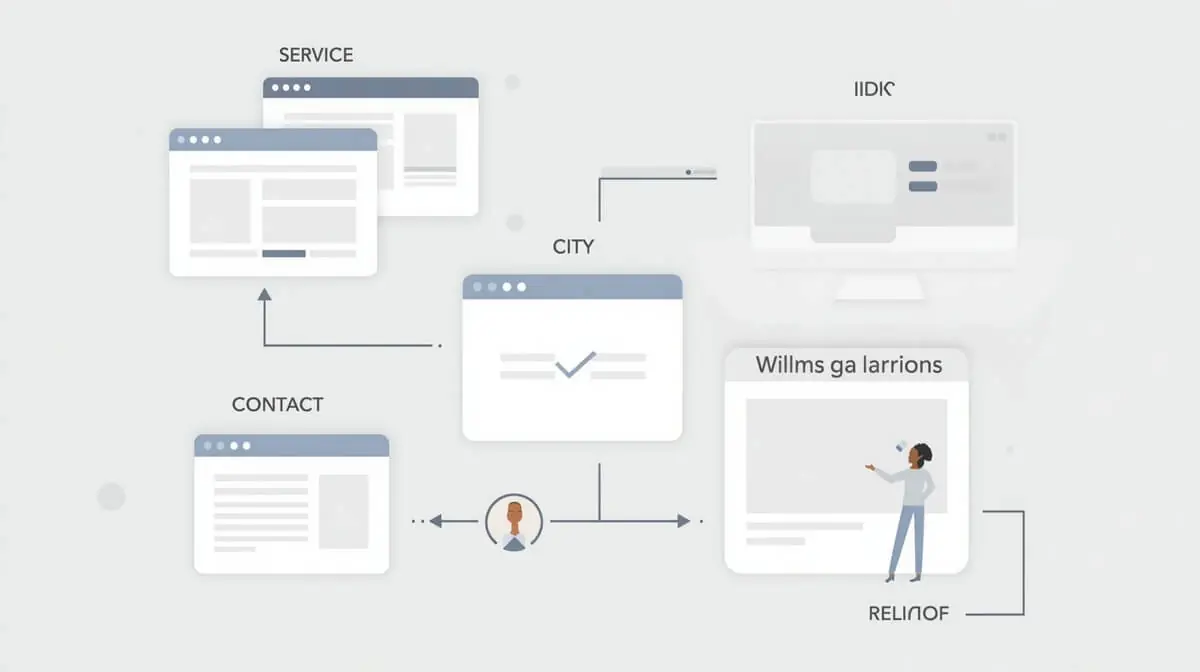
Many local business websites have city pages where only the city name changes. Visitors can feel that immediately. Search engines can too.
A good city page should answer a real local question: Do you serve this area? What services are available there? What types of customers do you help? Are there nearby examples, photos, or common needs? How should someone request service?
The page does not need fake local stories. It needs useful local relevance. There is a difference.
Blog posts should not be dead ends
Blog content is often treated as a traffic tool. Someone writes an article, ranks for a question, and then leaves the visitor with nowhere useful to go. That is a missed opportunity.
A good blog post should connect naturally to the business. If the post explains a common problem, it should point to the related service. If it compares options, it should help the reader understand when to contact a professional. If it discusses local issues, it should connect to the relevant service area.
The goal is not to turn every article into a sales pitch. The goal is to avoid dead ends.
The contact page is part of the conversion path
The contact page is often neglected because it seems simple. But this is where many visitors make the final decision. A weak contact page can create doubt at the worst possible moment.
It should be clear what happens after someone submits the form. It should show service areas, response expectations if possible, contact options, and a form that asks for useful information without feeling like paperwork.
A contact page should reduce friction, not simply collect messages.
The homepage still has a role
None of this means the homepage should be ignored. It still sets the tone for the business. It should explain who you help, what you do, where you work, and why someone should trust you. It should guide visitors to the right pages quickly.
But it should not carry the full weight of the website. If your service pages are weak, your homepage has to work too hard. If your city pages are thin, your homepage cannot create local relevance by itself. If your blog posts do not connect to services, the homepage cannot recover those lost visitors.
The perfect homepage is not dead because homepages do not matter. It is dead because customers no longer enter websites in one predictable way. A better goal is to make every important page clear, useful, and capable of moving the right visitor one step closer to action.

Professional websites for small businesses and service companies.
Designed to present services clearly and attract new customers.

Other Insights
Smart Ideas for
Growing Online
Growing Online