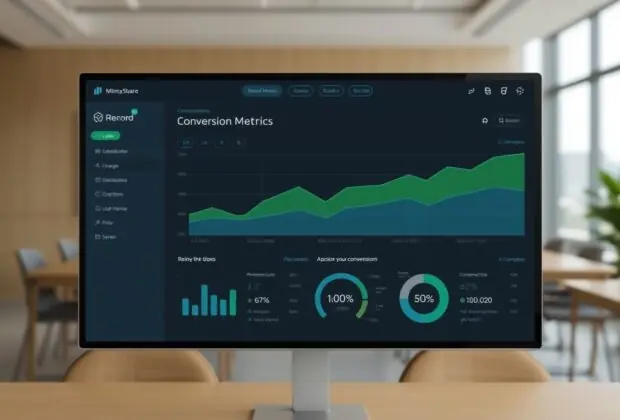
A business website can either exist… or it can work.
For many small and mid-sized companies in the U.S., this difference is not about design trends or technology. It comes down to structure, intent, and how well the website is aligned with local search behavior.
This is where the gap between a basic website and a local SEO-driven website becomes critical.
What Is a Basic Website?
A basic website is typically built to present a business, not to actively generate demand.
It often includes:
- A homepage
- A services page
- A contact page
- Minimal content depth
- Generic messaging
From a technical standpoint, it may be perfectly functional. It loads, it looks acceptable, and it provides information.
But from a business standpoint, it has one major limitation:
It relies on people already knowing about the company.
There is no real strategy behind how the site appears in search results, how it captures local demand, or how it converts visitors into leads.
What Is a Local SEO Website?
A local SEO website is built with a different goal:
To attract, position, and convert local search traffic consistently.
It is not just a website – it is a structured system designed around how people search for services in specific cities, regions, and industries.
A properly built local SEO website includes:
- Location-based pages (city, region, service areas)
- Service-specific landing pages
- Internal linking that supports search intent
- Content aligned with real search queries
- Technical optimization for search engines
- Clear conversion pathways
This type of website does not wait for traffic.
It is designed to earn visibility and guide decisions.
The Core Difference: Presence vs. Positioning
The difference can be simplified:
| Basic Website | Local SEO Website |
| Exists online | Competes in search |
| Generic structure | Intent-driven structure |
| Limited pages | Scalable page architecture |
| Passive | Active lead generation |
| Design-focused | Strategy + design |
A basic website answers: “Who are we?”
A local SEO website answers: “Why should someone in this area choose you right now?”
Why Structure Matters More Than Design
Many businesses believe that improving a website means redesigning it visually.
In reality, most underperforming websites fail because of structure, not aesthetics.
A local SEO website is built around layers:
1. Service Layer
Pages targeting specific services (e.g., website redesign, maintenance, local SEO)
2. Location Layer
Pages targeting cities, regions, and service areas
3. Industry Layer (when relevant)
Pages tailored to specific business types (contractors, clinics, local services)
4. Supporting Content
Articles and resources that expand topical relevance
These layers are connected through intent-driven internal linking, not random navigation.
This creates a system where:
- Search engines understand relevance
- Users find exactly what they need
- Conversion paths become clear
How Local SEO Websites Capture Real Demand
Local search behavior is highly specific.
People do not search for: “website”
They search for:
- “website redesign for small business”
- “web designer in Illinois”
- “fix my website issues”
- “WordPress support near me”
A basic website is not built to capture these variations.
A local SEO website is.
It aligns pages with:
- Real search queries
- Geographic modifiers
- Problem-based intent
This allows the website to appear across multiple entry points, not just the homepage.
Conversion: The Often Ignored Layer

Even when traffic exists, many websites fail at conversion.
A local SEO website is designed to guide decisions:
- Clear messaging aligned with business problems
- Structured content that builds trust
- Logical progression from information to action
- Consistent positioning across pages
It does not overwhelm visitors. It helps them move forward.
When a Basic Website Becomes a Limitation
A basic website may work in early stages.
But over time, it creates bottlenecks:
- Limited visibility in search
- Dependence on referrals or ads
- Weak positioning against competitors
- Missed opportunities in local markets
At that point, the issue is not “traffic” – it is architecture.
Redesign vs. Rebuild: What Businesses Actually Need
Many companies assume they need a full rebuild.
In practice, the better approach is often a structured redesign:
- Preserve what already works
- Improve page hierarchy
- Expand service and location coverage
- Strengthen internal linking
- Refine messaging and positioning
A redesign focused on structure can transform an underperforming website into a scalable asset.
A Practical Example
Two companies offer the same service in the same region.
Company A:
- One services page
- No city targeting
- Generic messaging
Company B:
- Dedicated service pages
- Multiple city pages
- Clear positioning per audience
- Strong internal linking
Even with similar design quality, Company B will dominate search visibility and lead flow.
The Strategic Shift
The key shift is moving from: “We need a website” to “We need a system that generates consistent local demand”
This is not about adding more pages randomly. It is about building a structured, scalable foundation.

A basic website is a digital brochure.
A local SEO website is a business tool.
For companies operating in competitive local markets, this difference defines whether the website remains a static presence or becomes a consistent source of qualified leads.

Professional websites for small businesses and service companies.
Designed to present services clearly and attract new customers.

Other Insights
Smart Ideas for
Growing Online
Growing Online