
Page Content Optimization
We refine headings, copy, and page structure to better match search intent while keeping the content clear and useful for real visitors.
Optima Design optimizes the on-page elements that determine how individual pages are found and understood in search – including structure, headings, title tags, internal linking, and search intent – while identifying content gaps and pages competing against each other. The goal is to make every important page more relevant and better positioned to earn qualified organic traffic over time.
We refine headings, copy, and page structure to better match search intent while keeping the content clear and useful for real visitors.

Page titles and meta descriptions are improved to communicate relevance clearly and encourage more qualified clicks from search results.

We strengthen connections between related pages to help visitors navigate your website and search engines understand its content hierarchy.

We review how each important page aligns with the searches it should target and identify gaps, overlap, and opportunities for improvement.

We improve the parts of your website that search engines and potential customers rely on, from page structure and content to internal linking and technical on-page details.
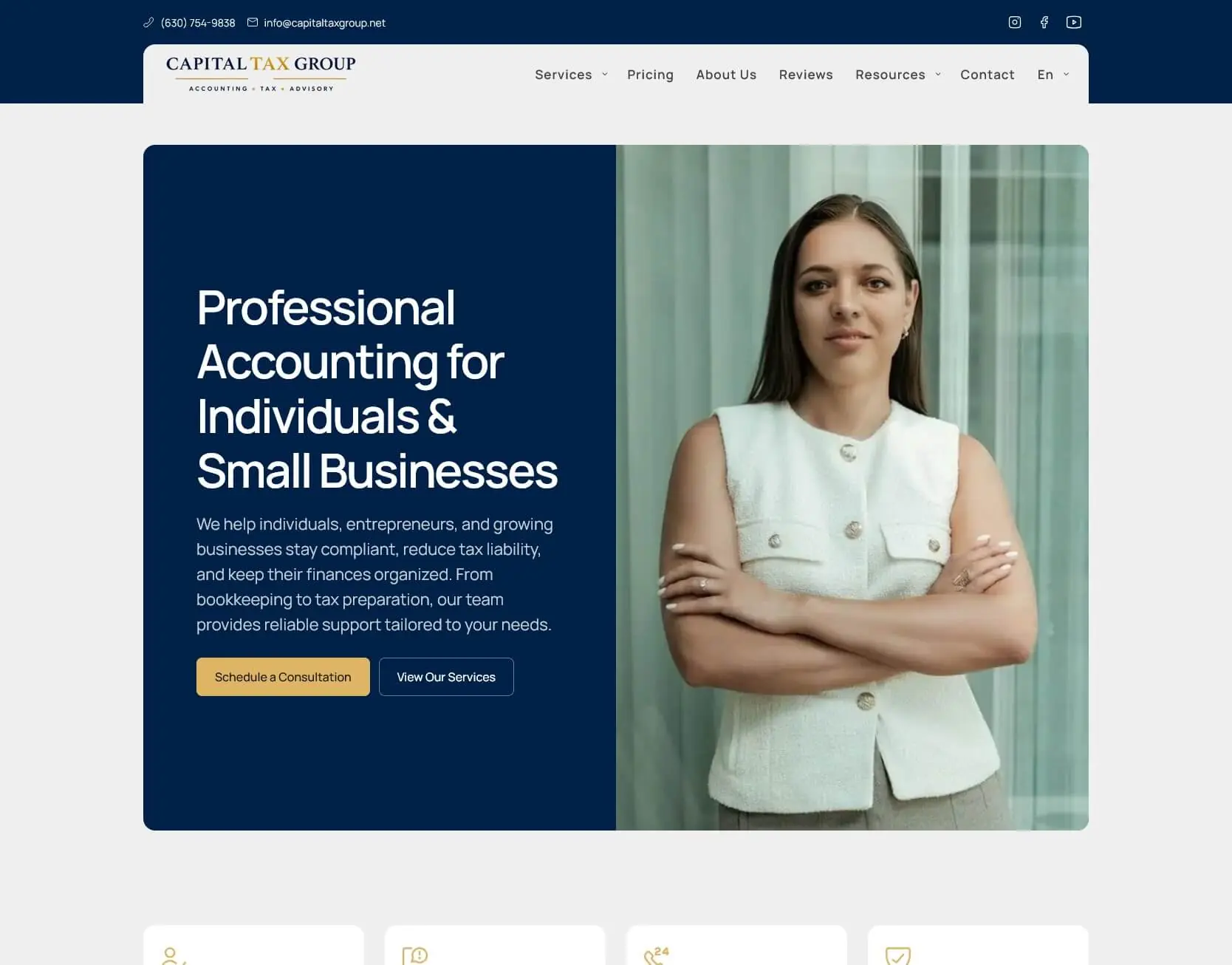
On-page SEO and website structure for a multilingual accounting firm serving clients across the U.S. and internationally.
We review your existing pages, website structure, content, metadata, internal linking, and current search visibility. We identify optimization opportunities, content gaps, overlapping pages, and other issues that may be limiting organic performance.
We determine which relevant search topics and keywords should be associated with each important page. This creates a clearer relationship between search intent, your services, and the content already available on your website.
We optimize page titles, meta descriptions, headings, content structure, URLs, images, internal links, and other relevant on-page elements. Where necessary, we also improve existing content so pages answer search intent more clearly without unnecessary keyword stuffing.
After optimization, we review the updated website for consistency, indexing, and internal relationships between pages. Search performance can then be monitored over time to identify additional content and optimization opportunities as your visibility develops.
Whether you need a new website, a redesign, better search visibility, or ongoing support, we can help you build a stronger digital presence.
On-page SEO refers to optimizing individual web pages – including content, structure, and technical elements – to help search engines understand and rank them for relevant searches.
This can result from weak page structure, unclear content targeting, technical issues, or pages competing with each other for the same search terms, among other factors.
On-page SEO involves elements you control directly on your website, such as content and structure. Off-page SEO involves external factors, like backlinks and online reputation, that also influence rankings.
Keyword selection should reflect what your actual customers search for, matched to search intent, rather than terms chosen based on guesswork or unrelated popularity.
Yes. When multiple pages target similar topics or keywords, search engines may struggle to determine which page is most relevant, which can weaken visibility for both.